




Why the Iron Bridge Still Matters: Lessons from the World's First Cast Iron Span
Historic Structures | October 4, 2026
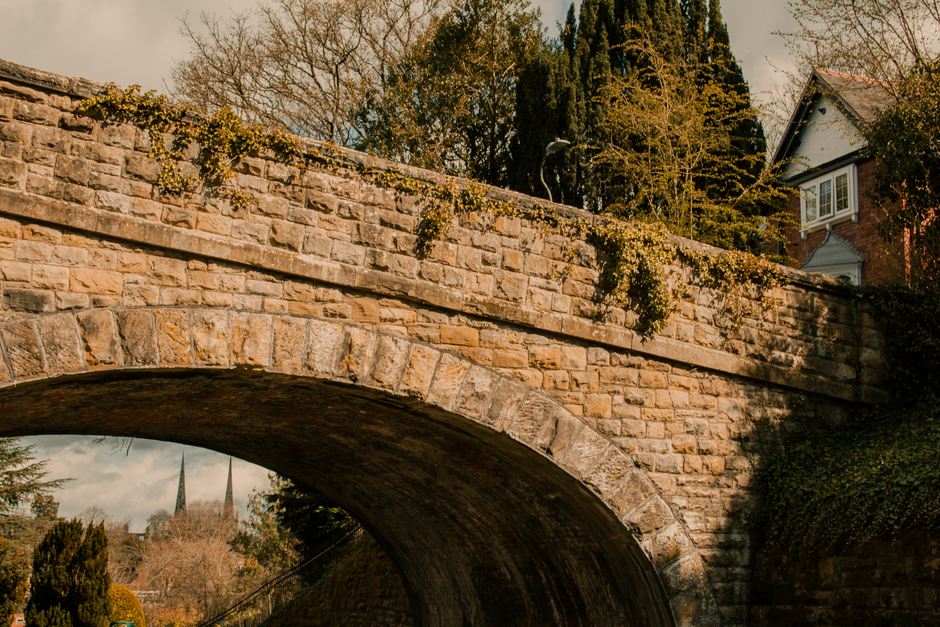
When Abraham Darby III proposed spanning the Severn Gorge with cast iron in the late 1770s, the idea struck many as reckless. Iron was for pots, rails, and machinery—not for a 100-foot crossing expected to carry carts, horses, and people. Yet the bridge that rose from Coalbrookdale in 1779 didn't just hold. It became a symbol of what infrastructure could become when material science, ambition, and local industry aligned.
What makes the Iron Bridge worth revisiting today isn't nostalgia. It's the way it demonstrates a principle that still guides good engineering: the right material, used honestly, can solve problems that older methods cannot. The bridge's cast iron ribs were fabricated in sections, assembled on site, and joined with dovetail joints and wrought iron wedges. It was prefabrication before the word existed.
Designing with the Material You Have
The Coalbrookdale region was rich in coal, limestone, and iron ore. Darby's grandfather had pioneered coke smelting, and the family foundry was already producing structural castings. The bridge was, in a sense, an advertisement for what the Severn Gorge could do. But it was also a genuine structural experiment. Nobody had reliable design formulas for cast iron arches. The engineers leaned on intuition, scale models, and a willingness to overbuild.
That overbuilding is why the bridge still stands. The ribs are thicker than modern analysis would require. The abutments are massive. The deck was originally timber, later replaced with iron plates. Every element reflects a conservative approach to a material whose behavior was not yet fully understood.
Modern infrastructure rarely enjoys that luxury. Budgets are tight, timelines are compressed, and materials are expected to perform near their limits. Yet the Iron Bridge's lesson isn't that we should overbuild everything. It's that uncertainty deserves respect. When we adopt a new material or method, we should ask what we don't know—and design accordingly.
What the Bridge Teaches About Maintenance and Legacy
The Iron Bridge has not survived on luck. It has been repaired, monitored, and studied for more than two centuries. In the 1970s, a major restoration addressed cracking in the cast iron and movement in the abutments. More recently, English Heritage and later the Ironbridge Gorge Museum Trust have invested in structural monitoring and careful interventions. The bridge is now a pedestrian crossing and a World Heritage Site, but it remains a working structure, not a museum piece.
That balance—preserving heritage while keeping a structure functional—is a challenge many infrastructure owners face. Old bridges, tunnels, and dams often carry more traffic than their designers imagined. Retrofitting them requires understanding original intent, current loads, and the limits of both.
The Iron Bridge endures because its builders took a risk and then took responsibility for it. They didn't walk away. They watched, repaired, and adapted. That is still the job.
-
Drainage Is a Design Decision: Rethinking How Roads Handle Rain
Sep 20, 2026Tunneling & Underground

-
Why Roundabouts Work: Geometry, Behavior, and the Case for Fewer Signals
Sep 4, 2026Geotechnical Engineering

-
The Cable-Stayed Bridge Comeback: Why This 1950s Idea Now Dominates Skylines
Aug 29, 2026Asset Management

-

-

-
The Art of the Retaining Wall: Engineering Ground That Won't Stay Put
Sep 3, 2026Urban Infrastructure

-
Designing for Maintenance: The Infrastructure Decision Nobody Wants to Make
Sep 22, 2026Maintenance and Inspection

-
Why the Iron Bridge Still Matters: Lessons from the World's First Cast Iron Span
Sep 25, 2026Transportation Design

-

Iron Bridge Ideas

If you can't trace how a load travels from roof to foundation, you don't yet understand the structure.